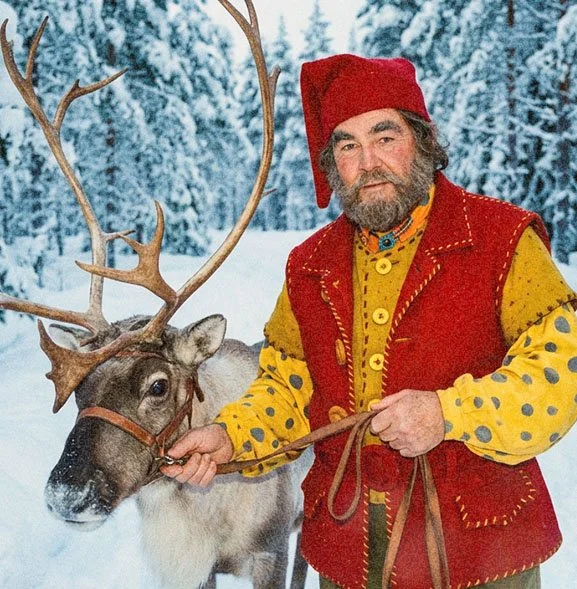
The Four Seasons of Santa
Those who think Santa belongs only to winter have never listened closely to the old stories. In the north - in the forests of Finland and the farmlands of Sweden - Santa’s year has always moved with the seasons, shaped by the same rhythm that governs the land, the animals, and the people who live close to them. Long before calendars and clocks, this was how his work was understood.
In winter, Santa is most visible. This is the season people recognise: snow-laden paths, lamplight, and the deep stillness that settles over the world. In Finnish folklore, the Tonttu believed winter to be a time of careful observation — listening more than speaking. Santa receives visitors, hears wishes, and carries the weight of belief with quiet steadiness. The Swedish Tomte taught that winter work must be calm and deliberate; haste breaks magic. When Christmas passes, Santa does not disappear — he withdraws, allowing the cold and silence to restore what the season has demanded.
Spring belongs to renewal. As the snow recedes and light returns, Santa’s world softens. In the old tales, this was when the Tomte checked boundaries, repaired fences, and ensured everything stood ready for the year ahead. Santa’s work mirrors this rhythm. Tools are repaired, clothing tended, and plans quietly adjusted. New ideas are considered, not for novelty, but for harmony. Spring is when Santa listens most closely to what the past season has taught him.
Summer is the most misunderstood season of all. In Finnish tradition, the Tonttu never stopped working in summer — they simply worked invisibly. While the world is bright and distracted, Santa focuses on craftsmanship. This is the season of making: writing, building, refining, and preparing. Long daylight hours allow for patient work, and evenings stretch gently into one another. Santa travels little during summer. Instead, he becomes a keeper of knowledge, preserving stories, traditions, and details that will matter months later when the world turns inward again.
Autumn is the season of readiness. In Sweden, the Tomte believed autumn to be sacred — a time when order must be restored before darkness deepens. Santa reviews routes, confirms arrangements, and ensures everything is as it should be. There is a quiet seriousness to this season, a sense that nothing must be left unfinished. The pace increases, but never becomes frantic. Autumn teaches that preparation is a form of respect — for the journey ahead, and for those who will be waiting.
And then winter returns.
This is how Santa’s year has always been organised - not around dates, but around balance. The four seasons are not separate chapters, but a continuous circle, each one supporting the next. Finnish and Swedish folklore never imagined Santa as idle, nor as hurried. He is steady, patient, and deeply tied to the natural world.
Those who meet Santa in December are seeing only the final movement of a much longer story. The magic they recognise is not created in a single night, but carried carefully through every season of the year.
From the Arctic wilderness,
Anders - Senior Elf